Your Essential Manual to Management Software for Trustees: Simplify Oversight and Strengthen Compliance
In today's complex regulatory landscape, trustees confront mounting challenges in control and conformity. Robust management software has developed as an critical mechanism for advancing operational efficiency. By consolidating materials and automating activities, such software can greatly enhance governance. However, selecting the correct solution necessitates detailed examination of numerous aspects. Understanding these intricacies is imperative for trustees intending to optimize their management practices and confirm adherence to standards. What steps should they take going forward?

The Importance of Administrative Software to Trustees
Effective administrative systems serves as an important tool for trustees charged with overseeing complex financial and administrative duties. It streamlines processes, making certain that trustees are able to manage numerous accounts and records efficiently. By bringing data together, software furnishes easy access to key information, which is necessary for making well-informed choices and meeting regulatory requirements.
Moreover, this system curtails the risk of oversights by mechanizing regular duties such as submissions and archiving. With a coherently structured digital framework, custodians can more effectively monitor key dates, supervise budgetary health, and facilitate communication among participants. The ability to generate live intelligence boosts visibility and encourages accountability.
Ultimately, administrative tools assists trustees handle their duties with increased accuracy and assurance, allowing them to focus on strategic planning rather than administrative burdens. This shift not only enhances operational efficiency but also strengthens the overall oversight structure within which trustees operate.
Essential Characteristics of Efficient Trustee Management Software
Trustees gain significant advantages from administrative platforms equipped with vital features tailored to their unique needs. A comprehensive control panel allows for real-time monitoring of assets and compliance status, ensuring openness and responsibility. File organization features facilitate secure storage and quick access of critical documents, reducing the danger of displacement or damage. Additionally, computerized report generation systems simplify the preparation of financial summaries and compliance reports, conserving hours and minimizing mistakes.
Collaboration tools facilitate interaction among trustees and stakeholders, improving decision-making procedures. Intuitive interfaces are important, as they ensure that all trustees, regardless of technical proficiency, can easily navigate the software. Adjustable alerts and notifications help trustees stay informed of key deadlines and compliance changes. Finally, robust security measures protect sensitive information, guaranteeing data integrity and confidentiality. Together, these vital features strengthen the effectiveness of trustee management software, supporting the rigorous demands of governance and oversight.
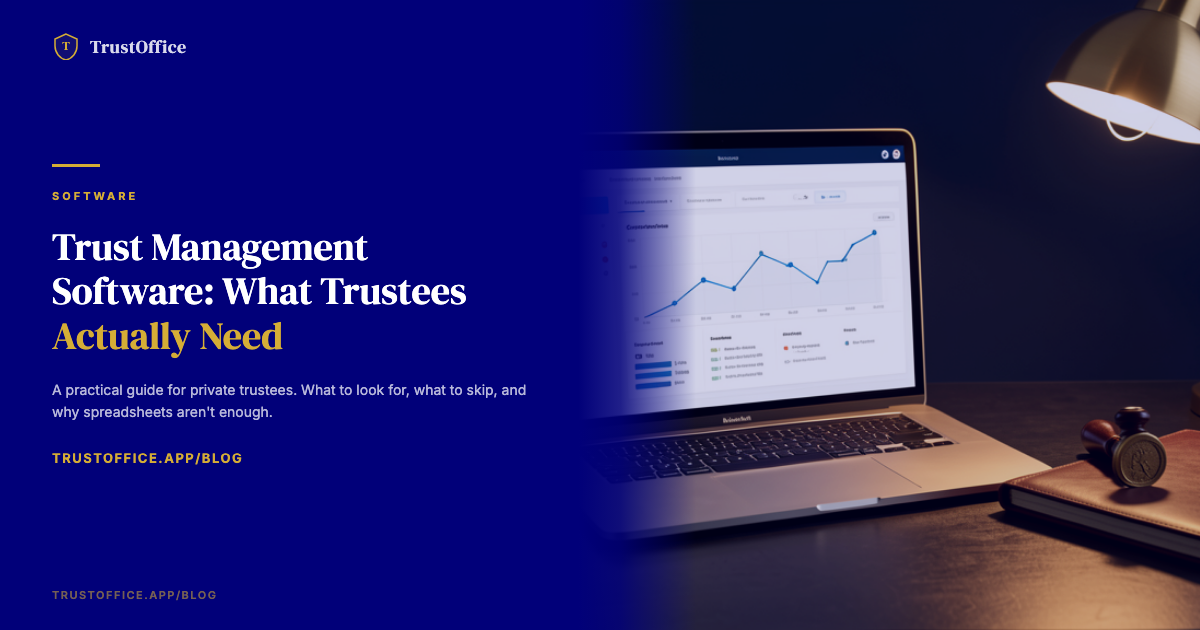
Key Advantages of Administrative Software for Trustees
While the complexities of overseeing fiduciary duties can be challenging, deploying management solutions offers substantial benefits that streamline processes and improve productivity. One important advantage is improved organization; software provides a unified hub for documentation, making it simpler for trustees to retrieve critical data. Additionally, automated tools minimize repetitive work, allowing for timely updates and decreased risk of errors.
Strengthened compliance serves as another critical benefit, as administrative solutions often includes integrated regulatory checklists and reporting tools, ensuring fiduciaries fulfill legal obligations more productively. Furthermore, cooperation grows smooth; various parties can obtain current information, facilitating enhanced communication and better decision-making.
In conclusion, data security is vital; established management software deploys advanced encryption and safeguards to protect sensitive information. By capitalizing on these benefits, trustees can concentrate on fulfilling their fiduciary duties with increased confidence and supervision.
Comparing Best Administrative Software for Trustees
When evaluating management software for trustees, it is vital to review the key features offered by various platforms. A comparison of pricing structures can provide information into the cost-effectiveness of each option. Furthermore, comprehending usability can demonstrate which software best meets the requirements of trustees.
Essential Attributes Overview
A comprehensive review of management software for trustees uncovers several key features that improve efficiency and decision-making. First, centralized document management enables easy access to important records, guaranteeing compliance and transparency. Second, robust reporting tools facilitate data analysis, enabling trustees to make informed decisions based on real-time metrics. Third, task management functionalities simplify workflows by delegating tasks and tracking progress. Additionally, secure communication channels foster collaboration among trustees and stakeholders, minimizing the risk of miscommunication. Integration capabilities with existing financial systems further enhance functionality, easing administrative burdens. Finally, user-friendly interfaces ensure that all stakeholders, regardless of technical expertise, can navigate the software efficiently, promoting widespread adoption and effective oversight.
Evaluate pricing structures side by side
Management software pricing structures created for trustees vary considerably among providers, demonstrating a range of features and functionalities. Some platforms offer layered pricing structures, where users are charged based on the quantity of trustees overseen or the intricacy of services employed. Others adopt a subscription model, charging monthly or annual fees that may contain additional costs for premium features or connections. A few vendors offer one-time licensing fees, appealing to those seeking long-term investments without ongoing payments. Additionally, some solutions may present flexible pricing tailored to specific organizational needs, creating greater flexibility. Overall, a thorough comparison of these pricing models is crucial for trustees to ensure they select platforms that corresponds with budgetary constraints while fulfilling their functional needs.
User Experience Insights
Comparative analyses indicate that platforms with strong support systems, encompassing guides and responsive support staff, greatly improve client contentment. Additionally, customer input emphasizes the significance of mobile accessibility, enabling trustees to manage responsibilities remotely.
In the end, software that prioritizes user experience not only encourages compliance but also boosts overall performance, making it an vital element for organizations seeking to optimize their governance processes.
Steps to Pick and Integrate Management Software
Choosing and implementing administrative tools necessitates thorough review of several key factors. First, trustees must determine their particular requirements, containing capabilities for regulatory oversight, reporting capabilities, and user accessibility. Evaluating alternative software choices in light of these criteria helps ensure that the selected solution matches business objectives.
Price represents another significant consideration; trustees should assess both preliminary costs and ongoing maintenance expenses. Additionally, accessibility is essential, as staff must adapt quickly to new systems to avoid disruptions.
It is also preferable to locate software that functions alongside existing tools, which improves functionality and efficiency.
When an suitable option is selected, a comprehensive deployment strategy must be developed, including instructional programs for staff members and a clear timeline for rollout. Continuous support and feedback mechanisms are critical to address any issues promptly, ensuring the software effectively meets the organization's requirements over time.
Beating Complications With Management Software
Even after a detailed selection and implementation process, organizations may still encounter challenges with enterprise applications. Standard difficulties involve organizational pushback, weak instruction, and integration difficulties with existing systems. Employees may experience hardship to acclimate to revised operations, generating irritation and decreased productivity. Additionally, if training is insufficient, users might not thoroughly leverage the software's features, hampering its value.
Integrating with legacy systems can create a noteworthy challenge, as compatibility problems may occur, calling for additional technical resources. Additionally, data migration can be difficult, with possibilities of loss or corruption while changing.
To address these challenges, organizations should stress ongoing learning and assistance, making sure users feel comfortable with the software. Regular feedback loops can help spotting ongoing issues, permitting timely adjustments. By establishing a culture of adaptability and providing adequate support, organizations can enhance the software's effectiveness and achieve better regulation and monitoring.
Emerging Innovations in Operational Software for Trustees
As the landscape of administrative tools for trustees evolves, several important developments are emerging. The incorporation of AI technology promises to improve analytical capabilities, while increased data security measures are becoming essential in protecting confidential data. Additionally, the expansion of cloud-based solutions offers greater accessibility and flexibility for trustees in managing their responsibilities.
Artificial Intelligence Embedding
The incorporation of artificial intelligence in management software for trustees is poised to revolutionize the way trust managers operate. By streamlining regular duties, AI enables trustees to focus on strategic choices and enhance workflow productivity. Forecasting tools can deliver insights into market movements, enabling more informed investment strategies and risk evaluations. Additionally, AI-powered solutions can enhance regulatory adherence by tracking regulations and flagging potential issues before they arise. Language interpretation technology can enhance communication by analyzing legal paperwork and generating documentation, thereby reducing administrative workload. As these systems advance, trustees will gain from enhanced accuracy and reduced mistakes, opening the door to a more forward-thinking and responsive approach to trust management in an increasingly complex regulatory landscape.
Advanced Data Security
Managing the challenges of trust management calls for increased focus to data protection, as cyber threats persistently transform. Trustees are progressively realizing that strong security measures are vital to protect sensitive information and ensure compliance with regulatory standards. Modern encryption approaches, layered authentication methods, and continuous compliance assessments are becoming typical elements in management software. These improvements not only protect data but also create greater trust among stakeholders. Furthermore, software developers are focusing on machine learning algorithms that can identify anomalous activity and potential breaches in discover now real-time. Consequently, trustees can leverage preventative security measures that respond to evolving threats, ultimately establishing a more secure environment for managing trust assets and information.
Cloud-Based Solutions Proliferation
Cloud-based solutions are transforming trustee oversight by offering unprecedented adaptability and accessibility. These tools allow trustees to retrieve essential information at any time and place, facilitating immediate teamwork among stakeholders. As more organizations adopt cloud technology, the movement is expected to continue, driven by the requirement for streamlined information handling and optimized processes. Enhanced connectivity features with existing tools also support improved workflows and communication. Furthermore, developments in artificial intelligence and automation within cloud environments are poised to enhance analytical capabilities and compliance tracking. By adopting these innovations, trustees can more effectively manage challenges and guarantee adherence to regulatory requirements, establishing themselves for long-term growth in an increasingly dynamic landscape.
Popular Inquiries Asked
How Much Does Trust Administration Software Usually Cost?
Trustee oversight software typically ranges between $50 to $500 per month, influenced by features and user count. Some companies may offer tiered pricing or upfront fees for designated features or services.
Do Users Need Training to Operate Management Software?
Training is often required for using management software, as it guarantees users comprehend the system's capabilities and functions. Proper training improves performance, reduces errors, and ultimately leads to better compliance and oversight in trustee management.
Can Management Software Connect With Existing Systems?
Yes, management software can connect to current infrastructure. Many platforms offer APIs and adjustable functionalities that enable seamless connections, enhancing information accuracy and workflow efficiency, eventually benefiting general business processes and strategic planning.
What Help Options Are Offered for Users?
Users generally can utilize diverse support options, including online tutorials, customer service hotlines, email assistance, and community forums. These resources seek to address inquiries and enhance the overall user experience with the software.
Do Mobile Applications Available for Trustee Management Software?
Yes, many trust platform solutions offer mobile apps, allowing users to handle assignments, access documentation, and coordinate effectively while on the go, improving their responsiveness and efficiency in managing trust administration duties.